Bourgeois Moralism, and how the Moralist killed it. Vol. 1
"Thus can be seen the deep-rooted seat of liberal moralism, of creating in-groups and out-groups, and of influencing politics through dissidence only rarely and only when convenient."


[This article is part of a multiple volume series on Bourgeois Moralism]
The nature of bourgeois moralism
It is normal for individuals to divide the world into boxes, and put labels on them. In fact, by declaring this behaviour as normal, one has put both an explicit and implicit label on it. The former is, of course, that they called it "normal"; however, by doing so, they have implicitly attributed a good value towards it. There are many situations in which we would want to call something good or bad, whether it is to inform our own actions or request action from our ingroup.
What is it, then, that defines good from bad? Is there nuance to it? Such questions of philosophical nature have been debated ad nauseam by individuals more learned in the matter. The only conclusion that is relevant here is that it is subject to axiological subjectivism. And therein lies the issue: moralism, that is deciding on policies and political actions based on one's subjective interpretation of right from wrong, is inherently harmful to the democratic process. One point of nuance that should be pointed out for the unimpressed is that there is a stark difference between political actions themselves and being an activist for such political actions. The latter, especially, is a good (phrasing intentionally chosen) instrument through which one can express their morality and advocate for such causes.
Engels makes the strongest argument that this volume collection will use regarding moralism, based on the his ideas of materialism. In Anti-Dühring, chapter 9, he states:
"[…]morality has always been class morality; it has either justified the domination and the interests of the ruling class, or ever since the oppressed class became powerful enough, it has represented its indignation against this domination and the future interests of the oppressed. That in this process there has on the whole been progress in morality, as in all other branches of human knowledge, no one will doubt."
A historical overview of bourgeois moralism
Manifest Destiny
Moralism can be traced back to antiquity, so for the sake of brevity and focus this volume will start with the Manifest Destiny belief that ran rampant in the USA from the 1840s all the way to the 1910s, as that is the point that not only exemplifies the core of the problem, but also the root of the current issue regarding moralism. As a quick history refresher, Manifest Destiny denotes the colonialist and expansionist idea that was predominant in politics during its time period, through which the USA has a God-given right to expand and take over the continent. Of course, in hindsight, this is chauvinism in full display less than 200 years ago. One should not consider 200 years in the context of geopolitics to be an overly long time-span; institutions today are based on institutions from 30 years ago, which are based on those from 30 years before them, et cetera. Thus, one can draw a convoluted line between the politics of then and the politics of now, especially when it comes to the idea that North America "belongs" to the USA.
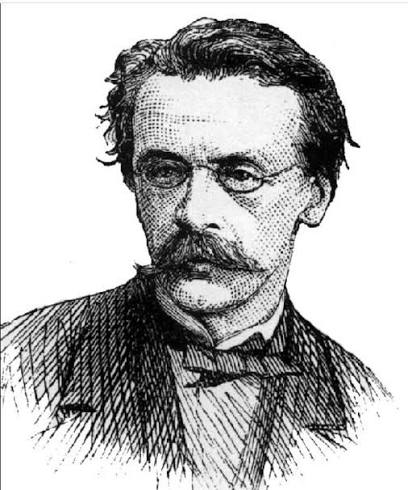
No small amount of blame belongs to The United States Magazine and Democratic Review, a journal established in 1837 by Jacksonian Democrats in Washington D.C. The motto that sat on top of its headlines might be familiar when it comes to contemporary politics: "The best government is that which governs least". One can debate the actual influence of the Democratic Review, depending on their camp and ideology, but one thing that cannot be denied is that at the very least it reflected the political atmosphere at its time. Even progressive, for the time, politicians would follow the overall idea of the Democratic Review's founder to:
"[…]manifest destiny to overspread the continent allotted by Providence for the free development of our yearly multiplying millions".
And indeed, one had no choice but to follow the slogan and work as part of the system. The answer as to why is bourgeoisie moralism. Mottos and journalistic content surrounding the political landscape did no less than fire up the masses, creating a massive "in-group" of those that believed in making their destiny manifest, and an "out-group" of those who didn't. To be expansionist, chauvinistic, and colonialist was seen as good, therefore policies that encouraged the subject were also moral and good. If one were to oppose such policies, then shunning was in order. Under those conditions, combined with the fact that they had to fight non-Christian natives and the like, spurred an age of aggression that lasted decades. The dissent that did exist was not necessarily against expansion by itself, but regarding institutions such as slavery. At the same time, there was truth in O'Sullivan's words; the American settler "needed" land and, as such, it was "moral" for them to expand out of self-interest. The debate around expansionism did not re-enter until the 20th century, with the rise of the Anti-Imperialist League and the Philippines War.
The war's need for capital
During the 1910s, World War One fired off. For the first two and a half years, the USA declared neutrality while at the same time lending to the Entente large amounts of capital, munitions, and food. Thus, one should note that their later entry into the war was not purely motivated by self-defence, but it was also informed by the fact that they had capital assets to protect overseas. The most important part, however, regarding moralism were two acts that passed into law: the Espionage Act of 1917 and the Sedition Act of 1918. Those two acts allowed the state to decide who was part of the in-group and who wasn't, effectively giving them the power to label individuals as "anti-American" on account of interfering with the war effort. John Reed, well-known journalist, author of "Ten Days that Shook the World" documenting the October Revolution in Russia, and nicknamed "American Bolshevik" was also victim to those two acts. After he returned from the USSR, with documents, letters, and other material which he would need to work on a project he was commissioned on, the state seized his documents. Not only did the ministry responsible drag its feet, but Reed was also made to attend indictments against him that questioned his loyalty to the war effort. To remind the reader, this is a war effort that was equally self-defence as it was capitalistic, and the reason why the bourgeoisie moralist mindset did not undertake any major pushback against it was because their interests back at home were unharmed.
By comparison, it is easier to attribute labels of "good" and "bad" regarding World War Two on account of one of the sides, that being the Axis and their allies, having a goal of genocide and eradication. Even then, before knowledge of everything that was happening was widespread, the American public was anti-war up until the bombing of Pearl Harbour. Before that, however, the USA still supplied the anti-Nazi forces in Europe, similarly to what they did in the war before this. What is of interest regarding moralism here is what happened after the war. Europe was partitioned between the Warsaw Pact and US-led western Europe, with the latter seeing intense injection of capital under the Marshall Plan. The idea was to rebuild their part of Europe, with the goal of undermining the USSR's efforts and opening up Europe to foreign capital.
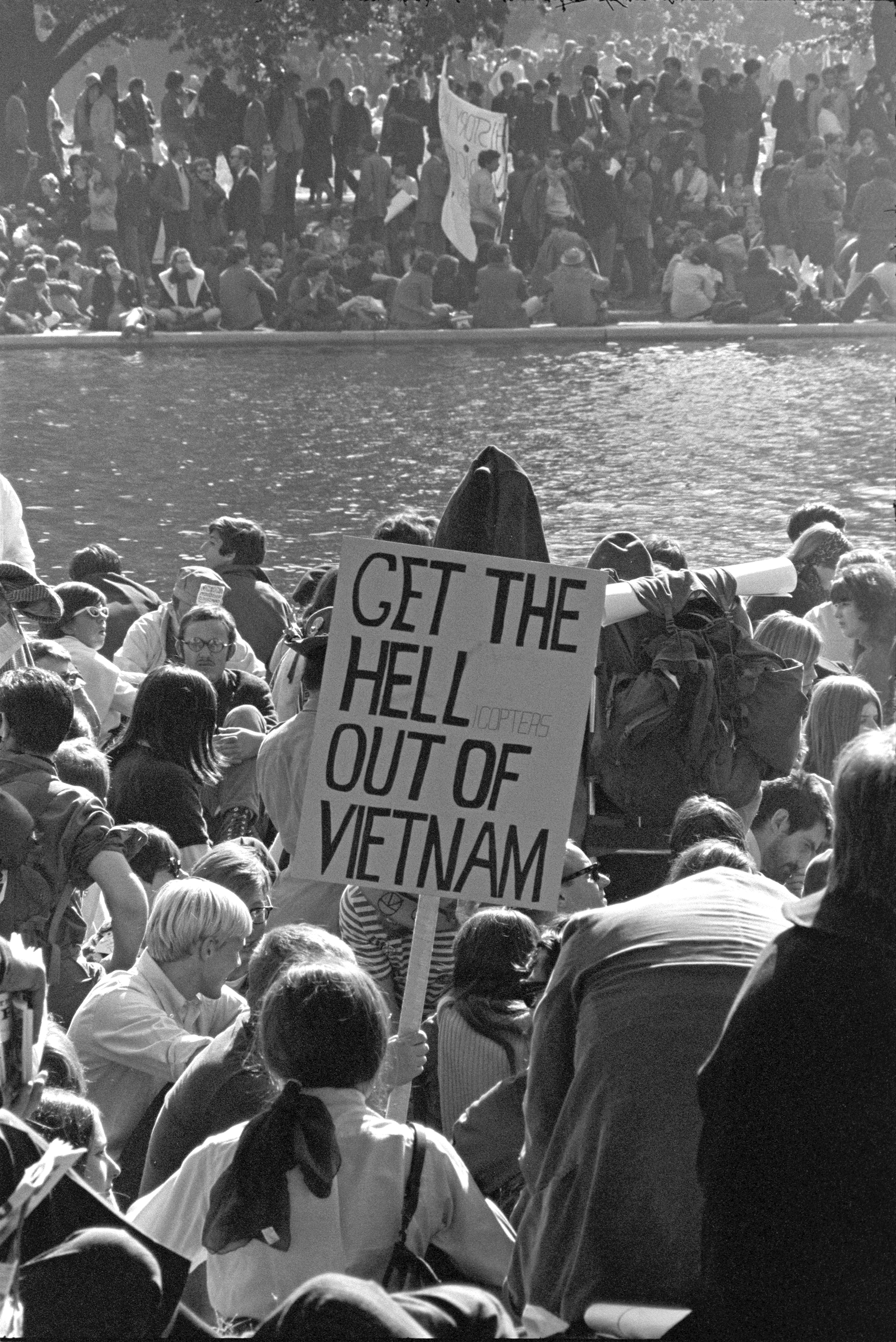
This overlapped with the second Red Scare, which is perhaps the most important point of this volume. Throughout the entirety of the Cold War spanning 1947-1991, USA-issued propaganda focused on the idea that to be Communist is to be anti-American, undemocratic, and immoral. The last part, of course, is the one that equates to bourgeois moralism, as it was presented as a "good" policy to actively suppress any form of left-wing dissent. In the meantime, the Vietnam War saw a large amount of conscripted youths being shipped to South East Asia. At first the war against Communism was a war against anti-Americans, but here came perhaps one of the major turns of the time: the war lost public support due to the large amount of conscription to a place that some considered to be far away and without a clear "moral" reason. Thus, one of the only times the American democratic protester has managed to put pressure on the government, which the latter was not able to absorb, was when their own sense of morality was deeply affected while at the same time they felt real risk of being sent to war. Thus can be seen the deep-rooted seat of liberal moralism, of creating in-groups and out-groups, and of influencing politics through dissidence only rarely and only when convenient.
This is not exclusive to the USA; the formation of NATO sealed the fact that USA policy will be European policy for the foreseeable future, with the added caveat that EU policy now supports USA interests. And with the US sphere of influence firmly rooted, the state apparatus was now, more than ever, ready to absorb almost any shock that a protestor could throw towards it.
[End Volume One]
Sources:
1877: Anti-Duhring—IX. Eternal Truths. (n.d.). Retrieved November 2, 2026, from https://www.marxists.org/archive/marx/works/1877/anti-duhring/ch07.htm
LaFeber, W. (1993). America, Russia, and the Cold War, 1945-1992 (7th ed).
McGraw-Hill.Reed, J. (Ed.). (2009). Ten days that shook the world. Floating Press.
Rosenstone, R. A. (1990). Romantic revolutionary: A biography of John Reed.
Harvard University Press.Scholnick, R. J. (2005). Extermination and Democracy: O’Sullivan, the Democratic Review, and Empire, 1837-1840. American Periodicals: A Journal of History & Criticism, 15(2), 123–141.